Sunday, November 8, 2015

Once Upon a Time in New York

A modern fairytale.

Once upon a time, a restless vagabond visited New York on a quest. The ancients of her village had instructed her to find a hidden treasure, one that would refresh her soul, touch her spirit, and wash away the tired callouses of life, advising, "New York is a kingdom of many hidden treasures that will speak to your soul, yet the key is to find the one meant just for you."


The vagabond marveled at the Shakespearean sonnet gardens in Central Park, for her love of the Bard was great and her fascination with iambic pentameter endless. "Perhaps this is my treasure," she thought. "Regardless, it is a treasure no doubt, but I will continue my journey."

The little vagabond trudged on through the shifting shades of the swaying trees, marveling at jazz musicians and wandering opera singers, until she stood quietly contemplating an angel beckoning to her from a captive sea. "I shall add this to my treasure of memories," she thought, "though my hidden treasure is yet to be found."


At the sight of a crying maiden she was much disturbed, and pitied the maiden's unfortunate dye job while secretly envying her perfect eyelashes. "The esteemed Sir Lichenstein is a great treasure indeed," she noted, though perhaps not the one she sought.


Next, the vagaond turned to find herself viewing the most beautiful painting she had seen in her life. "Never," thought she, "have I seen all of the magic, heartbreak, joy, and beauty of the entire world held captive on a single piece of canvas."


"I shall add this to my memories of my greatest moments in life," she thought, "and yet, inexplicably, I feel that my quest is not yet complete."

A great arch by surprise did take the damsel, and her eyes strained to decipher the mysterious carvings and gallant words. Though it was indeed of stunning stature and style, the scent of viands of Italian influence irresistibly drew her away to the village of green witches. There, she found neither witches nor sorcerers, instead savoring hidden bookstores, crisply scented ice cream parlors, delightfully grungy cafes, and succulent oases of spice, sandwiches, and cider.


The next morning, after sleeping above the fragrant open-air shops selling Lady Chelsea's flower, the vagabond set out once more. "Soon I must return to my hamlet, so I must find the hidden treasure soon."

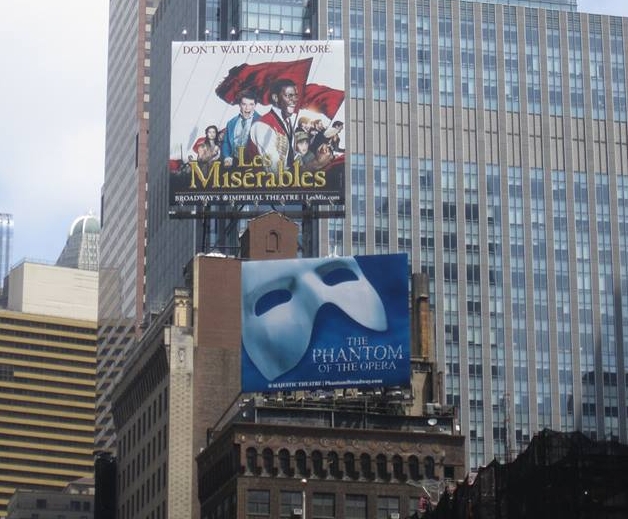
She trekked along the broadest way she had ever trod, marveling at the throngs of sojourners and colossal, seemingly mile-high paintings of minstrels, merchants, and musicians. The little vagabond spotted one in particular, which stood confidently apart from the rest, like a phantom surveying the unknowing world of the daytime. 


The little vagabond smiled. For her quest was complete.


Saturday, July 18, 2015

Featured Quote: Walt Whitman


"Vigil of silence, love and death, vigil for you my son and my soldier, 
As onward silently stars aloft, eastward new ones upward stole..." 

"Daybreak Gray and Dim" (1890s)
Walt Whitman

I came across this striking painting while on a business trip in San Francisco, California. Post-conference, my great (truly great) aunt and I visited the de Young Art Museum, located in the beautiful Golden Gate Park. Among the grand landscape paintings of the Hudosn River School hangs a small painting, nearly dwarfed by the surrounding paintings' sheer breadth of canvas. Frederic Edwin Church swirled sunset hues into the shape of a tattered American flag, with the starry night sky suggesting the flag's own starry canton. Rather uncharacteristically, I actually appreciated its sweet sentimentality, and then was about to move on when I spotted the year in which Church painted "Our Banner in the Sky": 1861, the dawn of the Civil War.

So, speaking of Walt Whitman and the Civil War...

A couple of weeks ago saw the anniversary of the Battle of Gettysburg. And only yesterday, I finished reading Edith Wharton's novella "The Spark," centering on the effect that Walt Whitman's fictional friendship had on a young, uneducated Civil War soldier's morale fiber, in turn affecting the remainder of his life. The young soldier, now old by the end of the novella, simply knew Whitman as the "big backwoodsman" who visited him in the army hospital, and neither remembered Whitman's name nor knew of his poetry. In fact, the last lines of the novella reveal the old veteran's surprise at hearing Whitman's poetry for the first time:

"He was a great chap, I'll never forget him. --I rather wish, though," he added, in his mildest tone of reproach, "you hadn't told me that he had wrote all that rubbish."

The Spark
Edith Wharton

I love Walt Whitman's poetry. I love its freedom and intuitiveness, its merging of beautiful, melodic rhythms with unfettered honesty. And yet, it held no interest for the soldier, since to him, it fell short of the real-life, straightforward conversations he had valued. It seemed frivolous to him, a betrayal of Whitman's grittiness and humanity.

A little of this reminds me of my father, or "Papa," as I always have called him. A brilliant, self-made man who gathers up knowledge like I hoard art supplies, his library is full of historical biographies, studies of World War II and the Civil War, and works on the American West. It does not surprise me that he, a man of exceptional character, would surround himself with the biographies of historical figures with larger-than-life personalities and strengths so equal to his own. I am sure that Papa is too humble to realize this, and would honestly insist that he reads for knowledge, adventure, and understanding. 

I have never seen him read a single work of fiction.

When I bring up my love of fiction for its insight into human character, this is generally how the conversation goes:
Me: "You love reading so much, you really ought to try fiction."
Papa: "I'm not into books about unicorns and vampires." 
Me: "That's fantasy." 
Papa: "Fiction and fantasy are the same thing...."
Me: "Agh, no! No no no no no!
Papa: ".... and I want to read about real life."
Me: "Anatomy of a MurderTo Kill a Mockingbird, and The Help are all strongly based on real life, but the authors created them as fiction in order to weave a specific and powerful message with carefully-crafted details. It's not 100% made up, just altered with a purpose."
Papa: "Well, non-fiction isn't altered at all."
Me: "But non-fiction is mainly just facts, while fiction lets you learn more about human character and even more about yourself."
Papa: "I've only read one work of fiction in my life. I had to do a school report on Dracula. It was horrible. I am never reading fiction again."
Me: "Dracula's awesome! I mean, yeah, it's horrible, horrible."


Thursday, September 18, 2014

The Darlings and the Duds: GipsieGirl's Cinema Screed

The awesome, the awkward, the epic, and the appalling: all seared into my memory for good or for bad. And yes, screed is a real word. Look it up.

12 Angry Men (1957): A cast of great dramatic actors, including Henry Fonda and a young Jack Klugman, portray a jury's struggle over the fate of a young teenager accused of murdering his father. Evocative of a stage play, virtually the entire film takes place in the juror's room, resulting in an intense film that focuses on human nature, ulterior motives, prejudice, and dangerous preconceptions. 

Verdict: Darling

The Big Country (1958): Sweeping landscapes and intriguing characters surround the story of an seasoned Baltimore sea captain (Gregory Peck) whose unflappable poise and peaceful ideals brush his new neighbors in the American West a little bit the wrong way. By the way, I practically grew up on The Rifleman reruns, so seeing the gorgeous Chuck Connors as the villain really shook me.

Verdict: Darling


Citizen Kane (1941). Often called the greatest film ever made, I have tried twice - count that, twice - to watch it, and both times couldn't make it to the end. Aside from its truly breakthrough cinematography, it's just boring. (Please don't hurt me.)
Verdict: Dud


Clear and Present Danger (1994): With suspense, action, political intrigue, and espionage, the film centers on one of my favorite themes: appearance versus reality. It features my favorite actor, Harrison Ford, plus it is worth watching just to see Darth Vader and Han Solo together again. My only complaint is the film's claim that Panamanian food is the same as Mexican food. If I ever said that, my abuelita would hit me over the head with a plátano.
Verdict: Darling


The Empire Strikes Back (1980): Must I really explain why this is awesome? Fine. Imaginative, epic, never a dull moment, and visually striking, especially considering the limitations in special effects at the time. It is everything that the new prequels aren't. Oh yeah, I went there.
Verdict: Darling


First Wives Club (1996): A few funny moments crushed by crassness and tedium. Goldie Hawn and Bette Midler are just too talented for this film's unimaginative writing and shallow intelligence. It made me want to run screaming back to my collection of great classic films.
Verdict: Dud


The Fugitive (1993): Harrison Ford and Tommy Lee Jones give great performances (surprise, surprise) in a well-written story full of suspense and adventure. Despite the modern setting, I also recommend the film for its surprising similarities to what 19th-century heroes went through on the Underground Railroad.

Compared to fugitive slaves, Richard had it super super easy, but the similarities are still there. The hounds, the freezing water, the danger of looking up just at the sound of your name, the dumb luck, the improvisations and disguises, and the man who's a fugitive for no fault of his own.
Verdict: Darling


Gaslight (1944). A sweet young woman marries the suave Frenchman who has swept her off her feet. What could possibly go wrong? Don't gaslights always flicker inexplicably in old houses? It also features a seventeen-year-old Angela Lansbury (wearing padding to make her slight frame more wench-ish) in a role as distinctly snarky maid. Oh yeah, and the suave leading man, Charles Boyer, was the inspiration for Looney Tune's Pepe Le Pew.
Verdict: Darling


The Haunted Mansion (2003): The opening montage of this film, portraying tragic events at a gilded, lavish ball, is the best part of the film. It set me up to expect a film more along the lines of Phantom of the Opera, and then gave me Scooby Doo. Well, Scooby Doo without the dog... or the laughs... or anything interesting at all, for that matter. Excuse me while I block this all out of my memory. My childhood memories of the Haunted Mansion ride deserve better.
Verdict: Dud.


The High and the Mighty (1954). This film started the whole craze for disaster films,* but I love its witty, gripping story. It should be the feature film on every long flight, I think that would be just lovely.
Verdict: Darling


A Holiday Affair (1949). One of my favorite Christmas movies - a sweet romantic comedy involving an unpredictable freewheeler who meets a young war widow and her little boy. Woven into the lighthearted comedy is a dark reminder of the recent World War II through the widow's inability to move on from her husband's death.

Verdict: Darling


Hugo (2011): This work of art by Martin Scorsese has gorgeous visuals, excellent acting, and a beautiful soundtrack, plus a wonderful homage to silent film and the dangers of losing these treasures without preservation. A great watch for steampunk fans, classic film buffs, and art lovers everywhere.
Verdict: Darling


The Hunt for Red October (1990): A gripping Cold War thriller. The best part: Sean Connery keeps his sexy Scottish accent even as a Russian sea captain. The sad part: Harrison Ford had not yet taken on the role of Jack Ryan.
Verdict: Darling


It Happened One Night (1934). The story of a worldly reporter pursuing a runaway heiress for the story that could regain his job provides the backdrop for a timeless comedy. It also serves as an interesting time capsule, with vintage cars, Colbert's boyish bob, and striking black and white cinematography showing an era long gone. Yet Clark Gable, my dear, is always in style.

Verdict: Darling


It's a Wonderful Life (1946). A film I'm supposed to like. Great cast, and I usually love Frank Capra films, but in this case... ugh. It's cheesy and overly saccharine, and since I was force-fed it every Christmas of my childhood I know every stinkin' line by heart.

Verdict: Dud

The Kid (1921): Charlie Chaplin's tale of a Little Vagabond and the tiny orphan he adopts is full of fun, slapstick, surprises, and tragedy. Proof that a silent film can be just as entertaining and poignant as any of those newfangled talkies.

Verdict: Darling


Ladyhawke (1985): A medieval tale filmed on gorgeous locations in Italy, and featuring a magnificent Friesian war horse. Just don't judge the anachronistic '80s music, it's a sign of the times.
Verdict: Darling

Left Behind (2000): Having read the book of Revelations, I found this film to have a total lack of imagination. The apocalyptic, otherworldly descriptions in the book of Revelations have so much potential for epic action and fantastic special effects, but all I remember was one lousy car explosion. If you can't do it well, just don't do it at all.
Verdict: Dud

Macau (1952): Witty dialogue and effortless comedy make this light-hearted film noir a keeper. The film stars Robert Mitchum as a rudderless expat and Jane Russell as a tough nightclub singer, as well as one of my favorite supporting actresses, Gloria Graham.

Verdict: Darling


Maverick (1994): A fun, light-hearted Western with refreshing humor, a well-paced story, great costumes, and settings that really make me miss what I've seen of the West. I love how it features a stunt inspired by Yakima Canutt's breakthrough stunt on Stagecoach (1939), which also inspired a famous stunt in Raiders. And going back to settings, the film includes a gorgeous riverboat. Sigh. I want one.
Verdict: Darling


The Monster that Challenged the World (1957). Bad, just bad. The good guy fights off the giant mutated mollusk in a chemistry lab by throwing little test tubes and beakers, all while an emergency axe hangs unused on the wall. It's that sorta intelligent film making the whole way through.
Verdict: Dud

On the Waterfront  (1954). A young and very handsome Marlon Brando plays a longshoreman entwined in a corrupt and brutal union led by tough guy Lee J. Cobb. Brando won an Oscar for his performance, as did Eva Marie Saint as the sister of one of the men murdered by the union. Academy-award winning actor Karl Malden portrays the gritty Father Berry. My all-time favorite movie ever.

Verdict: Darling


North by Northwest (1959): Cary Grant (be still my heart) and Eva Marie Saint exude smart fashion sense in this thriller featuring mistaken identity, espionage, a rather spontaneous road trip, and a scene that will send you into a panic anytime you seen a small, low-flying plane. Or a corn field. Or a dirt road. Thanks a lot, Hitchcock. By the way, James Mason, with his beautifully cultured, sardonic voice, plays a delightful villain.

Verdict: Darling


Quatermass and the Pit (aka Five Million Miles to Earth): Turns out we're the product of genetic mutations of super apes masterminded by the Martians... who resemble gigantic grasshoppers... who control our brainwaves. Help, help, is there a writer in the house?
Verdict: Dud


Raiders of the Lost Ark (1981) A tip of the hat to 1940s and 50s adventure films, Raiders is one of my all time favorites, with its exotic locales, classic bad guys, archaeological themes, and John Williams score. No matter how dangerous that Cairo Street market is, it's still one of my favorite film settings with the exotic clothing,
Though I admit I still hide behind my hands when the bad guys open the Ark. Eww. They more than had it coming but, eww.
Verdict: Darling

The Return of the Pink Panther (1975). An exotic dish heavily seasoned with deliberate camp, Christopher Plummer's charm, and Peter Sellers' brilliant insanity.

Verdict: Darling


Ruggles of Red Gap (1935). Acclaimed British actor Charles Laughton portrays a veddy, veddy propah butler who, due to his employer's losing hand in a poker game, ends up working for some quite improper roughs in the American West. I loved stumbling across this forgotten comedy, which is both funny and fresh for all its years.

Verdict: Darling

The Runaway (1962): This beautiful film is all but forgotten as well. In this tale of a young urchin who runs away with his only friend at the time, a stray mutt, Cesar Romero's endearing performance as the priest he encounters makes this a real gem. Rather than detracting, the small (yet strong) cast and small budget give this film a sweet simplicity that compliments the heartfelt storytelling.
Verdict: Darling

Somebody Up There Likes Me (1956): This unforgettably powerful film stars Paul Newman as lovable tough guy and rising boxing champ Rocky Graziano. The beautiful Pier Angeli stars as his shy, resilient sweetheart. Hmm... this sounds familiar... Wait, you all thought Rocky was original? Aw, how cute. 
Note: Look for Steve McQueen in his first film role one of Rocky's shadier friends.
Verdict: Darling


Star Wars (1977): Perhaps one of the reasons I love the film is because it's basically western meets sci-fi. Small-town boy meets eccentric old hermit, bad guy in black acts like he owns the territory, bad guy's goons burn a remote farm but pin it on the local indigenous tribe, boy and hermit meet hot-headed gunslinger, who meets snobby city girl...
Verdict: Darling


The Third Man (1949): Unlike Citizen Kane, here is an Orson Welles and Joseph Cotten film I can get my teeth into! Strikingly filmed on location in the post World War II ruins of Vienna, the film reeks of mystery, suspense, and quite a few twists and turns.
Verdict: Darling


The Ten Commandments (1956). When I was a child, I wanted to look just like the glamorous Nefirtiri - the sultry eyeshadow, the ethereal gowns - so sublime, though perhaps not the best role model out there. Yet, like the Ancient Egyptians used to say, c'est la vie. While not exactly historically or archaeologically accurate, the film is a tribute to Cecil B. De Mille's incredible talent for the epic film. And neither Charlton Heston nor Yul Brenner are hard on the eyes in this film.
Verdict: Darling

Tora! Tora! Tora! (1970)" Produced as a collaboration between American and Japanese filmmakers, this critically acclaimed film depicts the events surrounding the Japanese attack on Pearl Harbor. The portrayals of the men on both sides are powerful, human, and riveting.
Verdict: Darling (if you can call a war movie that)


*As a rule, I do not like disaster films at all, since they tend to make a spectacle of human suffering. However, the High and the Mighty is more a story of humanity, courage, cowardice, and, well, all-around gumption.


Monday, July 28, 2014

Favorite First Line.... EVER

“Cannery Row in Monterey in California is a poem, a stink, a grating noise, a quality of light, a tone, a habit, a nostalgia, a dream."
 
Cannery Row (1945)
John Steinbeck


Wednesday, May 28, 2014

Featured Quote: The House Haunted


"The room itself might have been full of secrets. They seemed to be piling themselves up, as evening fell, like the layers and layers of velvet shadow dropping from the low ceiling, the rows of books, the smoke-blurred sculpture of the hearth." 

 "Afterward" (1909)
Edith Wharton


Thursday, April 24, 2014

When Great-Great-Great-Great-Grandpa Behaved Badly

The thing about the oral history in my family is that I never know where fact ends and all tales begin. Most of us have always been adept at crafting good stories, with a few embroideries thrown in for emphasis (often without realizing we're doing it). However, you can see oral history as a problem, or if you're like me, you can see it as a psychedelic splash in the already colorful painting that I call family.

Oral history is about all we have when it comes to our family's past. Descended from farmers, ranchers, soldiers, gangster's molls, sheriffs, and moonshiners, the clan survived hardships like the Great Depression by picking up roots, packing light, and going wherever the work took us, whether Iowa, Nebraska, California, Maryland, etc. Coats of arms, family documents, and ancestral tomes have never exactly been a part of the family vault. Nor has a family vault. Now, a varnished wooden Nebraska Cornhuskers clock, a pair of dusty black cowboy boots belonging to my great-grandfather... those are our kinds of heirlooms.

Anyhoo, oral history says we are descended from Robert Frazer, one of the members of the Corps of Discovery a.k.a the Lewis & Clark Expedition. My dad knows way more about this than I do, but I think he was only supposed to accompany the expedition until it was time for the keel boats to turn back. However, Grampa Bob soon won a permanent place with the Corps. Also, he drew a map of the expedition's trek, which can be viewed online through the Library of Congress's website. Our oral history had erroneously told me that both his map and a journal were lost - so seeing it in the LOC's online collections was exciting, once I'd recovered from my heart attack.


Robert Frazer (d. 1837). “A Map of the discoveries of Capt. Lewis & Clark from the Rocky Mountain and the River Lewis to the Cap of Disappointment Or the Columbia River At the North Pacific Ocean By observation of Robert Frazer” 1807. Manuscript map. Geography and Map Division, Library of Congress, G4126.S12 1807 .F5, 2004626119

What? No it's not Middle Earth, it's America! Yeah, well, historians think it was a bit fanciful too. 


Anyway, our oral history was right in that Frazer's journal really was lost, which he had even intended to publish. As the Library of Congress summarizes in its online exhibit "Rivers, Edens, Empires: Lewis & Clark and the Revealing of America,"
Private Robert Frazer was the first member of the Lewis and Clark party to announce publication of an expedition journal. His account never reached print, and the original journal was lost. This manuscript map is the only remnant of that initial publishing attempt. Since Frazer had little or no knowledge of surveying or natural sciences, the map is a strange piece of cartography. He traces the expedition's route, but continues to depict older views of the Rocky Mountains and western rivers. Sometimes ignored, the Frazer map was one of the first to reveal the course of the journey and some of its geographic findings.
What did this lost journal contain? There have always been rumors among my family members that the journal was not lost, but in fact silenced for some unknown reason. 

And it seems Frazer didn't always have the best relationship with the Corps' leaders.

Here is an interesting article from "We Proceeded On," a publication by the Lewis & Clark Heritage Trail Foundation that I found while browsing History Quest: "Frazer's Mutiny" by Arlen J. Large. Wait, Frazer's what? If you scroll down to page 24 of the PDF, you'll see that on January 10, 1806, Clark wrote in his diary that "Frasure behaved very badly, and mutonous" during a trip to view a stranded whale on the Columbia River near Fort Clatsop. However, rather than receiving punishment, Grampa Bob was simply sent back to find a knife he had lost during the trip, and then told to return to the party. (Hmmm... he had a tendency to lose things and to create fanciful drawings - I'm thinking we really are related). If history ever shows that he "behaved very badly" due to an emotional breakdown at the sight of the whale dying on the beach, then I'll know for an absolute fact we're related. 


Large's article goes on to quote Lewis & Clark historian Gary Moulton, editor of the University of Nebraska Press's printing of their thirteen-volume set of The Journals of the Lewis & Clark Expedition, as saying:

Evidently Clark, perhaps after consultation with Lewis, decided that Frazer's behavior during the difficult and trying trip to and from the whale site was not serious enough to warrant disciplinary action.
A far different response, as Large points out, from the leaders' reaction to John Newman, who was court martialed, sentenced to seventy-five lashes (ouch), and booted from the expedition for "repeated expressions of a highly criminal and mutinous nature."

Apparently, at the end of the day, the hot-headed Robert Frazer was still a valuable member of the Corps. We may never know what his lost journal contained, but the writer in me enjoys imagining some of the possibilities. And, since most of my theories involve Doctor Who showing up to aid in their adventures, I am sure any respected historical journal would jump at publishing them.


Wednesday, December 25, 2013

Snapshots from Christmas Town 2013

Visting Busch Gardens Williamsburg's Christmas Town for the first time marked a great way to celebrate the holiday season. The European-themed amusement park transforms into a yuletide world of sparkling lights, festive music, live performances, and dramatic decorations - all of which resulted in the following travelogue of photos and memories.

Christmas Town's shows including Gloria, with powerful vocal performances, and Miracles, a dance-themed musical. 


High-powered voices soar in Gloria!

Ballet and modern dance in Miracles


But the real stars of the park were the decorations, with each country sporting a distinctly different style. 

Ireland

Killarney boasted golden tinsel swags and green tinsel shamrocks, all interlaced with colored lights. Green and gold are not only Christmas colors but also colors in the Irish flag - clever. I made two stops at Annie's Pub for Christmas Town hot chocolate with whipped cream, delicious and warming.


Reminds me of Galway Bay Irish Pub in Annapolis,
with all the wood paneling and warm ambiance.


The leprechauns have been at work....


France


France's white, cerulean, and blush pink decor evoked the glitzy lives of bygone bourgeoisie and whimsical reflections of Parisian style. I even got a photo with some bizarre looking jesters. And they say American clowns are scary.


This gorgeous, gigantic Christmas tree sends forth thunderous carols from within... and in English, oddly. Fortunately, the rest of the music throughout France is in French, even a lovely rendition Jingle Bells - I mean Vive le Vent. The tree must be a welcoming committee for foreign tourists.


King, Queen, and Court Jesters do their best to frighten tourists in France.

Wine Tasting

The wine tasting at La Belle Maison left me feeling pretty educated. Turns out all of those fancy wine rituals aren't just for snobs, they actually have a purpose! Mind blown. For instance:


  • Tip a glass of red wine away from you a little and wiggling your fingers behind it. Whether or not you can see them shows how deep the color is. Color, like taste, makes each wine unique


  • When you swirl the wine around in your mouth, breathing in through your nose helps you taste even more flavors.


  • Check out Snooth and Vivino for advice on wine pairings, ratings, etc.

  • I especially had some things to learn about the temperatures that make wines happiest when served. "Americans," said the sommelier Nora, "serve white wine too cold and red wine too warm. You're supposed to serve red wine at room temperature, but room temperature means a cellar... in a medieval castle... in the dead of winter." So, all I need is a medieval castle and I'm all set.

    I am now a fan of rosé, something I have never liked in the past. True French rosé "is neither cheap nor sweet," and is instead considered a delicacy in France. The wine tasting featured Rosé d'Anjou, which had a very elegant taste which, the sommelier explained, paired well with smoked turkey.


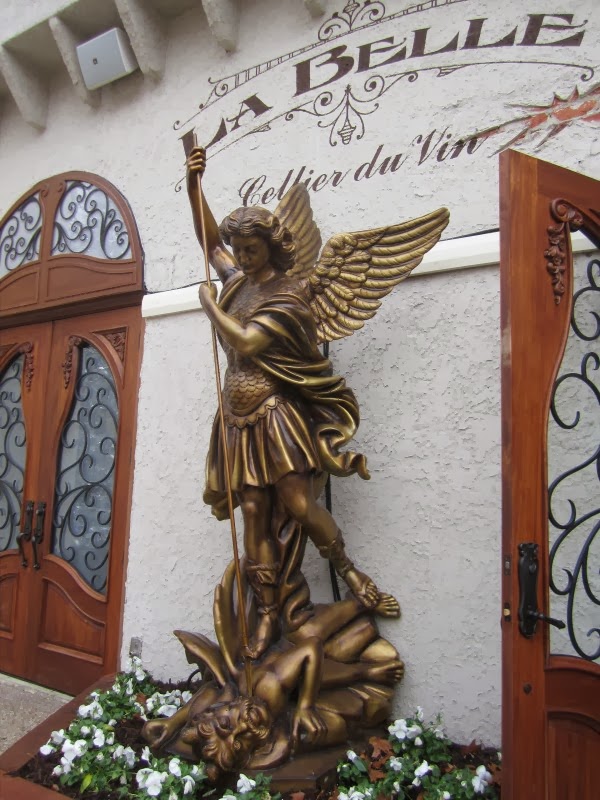
    Beautiful statue in front of La Belle Maison. This statue disappeared
    some time ago from France's town square, so I was happy to see it
    had shown up again!

    Rose d'Angou in my souvenir Christmas Town wine glass

    Sadly, I had never done a wine tasting before, and I thought I would be rude unless I drank everything that was given to me. Ooopsie. Is it just me or is it hot in here?

    Of course, no wine tasting is complete without a visit next door to... penguins? These penguins are real celebrities, residing in their own Ice Palace near La Belle Maison. I just wish I could have been on the flight to Williamsburg with them - pretty darn cute if you watch the video:


    Germany

    Dinner at Das Festhaus included a gluten-free pizza (baked in an oven-safe wrapper that prevented cross-contamination with gluten, unfortunately a must for anyone with life-threatening celiac disease like me - Busch Gardens is awesome). The always-festive Das Festhaus was even more bedecked than usual, with stunning chandeliers that reminded me of the Austrian chandelier in the Opera House in the Kennedy Center.


    Later, we browsed shops boasting German-made wares ranging from beer steins and nutcrackers to carved hunting horns and cuckoo clocks. Since they were made in Germany rather than China, I could not afford them, but could afford to gawk!


    French Canada

    Passing through France again we meandered in French Canada, where the Yankee Candle Carver was hard at work as usual and Caribou Pottery was decked out for a woodsy Christmas. Most of the fauna were indoors, with the exception of a beautiful Cooper's Hawk whose keeper was rushing him inside before the afternoon chill set in.


    Hand-dyed and handmade mushroom candles


    A gentle, mellow Cooper's Hawk - gorgeous

    I was dying to paint something at Caribou Pottery, but it takes a couple hours and the day was going by fast. We decided that next time we will have to take two days for Christmas Town.

    Italy


    Voyaging from French Canada into Italy unveils a vintage Christmas theme, replete with oversized mutli colored lights, giant clowing Santa heads (eeek!) and retro holiday-themed bill boards. Dean Martin replaces ancient Roma, and apparently his tradmark drinks abounded as well, as evident in the behavior of a gentleman who rushed up to me and enthused about how AWESOME!!! my outfit was. Attired in a curly brown scarf, my favorite winter hat (a huge furry ushanka), and a camel-colored winter coat, I thought I looked more like a terrifying squirrel, but to each his own.

    Italy was one of my favorite sections in Christmas Town, being a vintage girl myself. My mother felt herself yanked back into her childhood memories of 1950s and 60s Christmases, but the panic in her eyes soon changed to enjoyment... I hope.


    By now solidly nighttime, we boarded the train skirting around the perimeter of the park. I got yelled at by the conductor for leaning out of the train to get this shot. Whenever I see potential for a good photo all common sense goes out the window. Whoops.


    By foot, the lights were spectacular as well, since you became immersed in the visual festivities on all sides. Such as:


    ...the smashed-up car at Verbolten, which joined in the holiday festivities...


    ...the clock tower in Banbury Cross...


    ...and Escape from Pompeii, now the Polar Pathway...


    ...and the O Tanenbaum light show in Oktoberfest...