Showing posts with label History. Show all posts

Saturday, July 18, 2015

Featured Quote: Walt Whitman


"Vigil of silence, love and death, vigil for you my son and my soldier, 
As onward silently stars aloft, eastward new ones upward stole..." 

"Daybreak Gray and Dim" (1890s)
Walt Whitman

I came across this striking painting while on a business trip in San Francisco, California. Post-conference, my great (truly great) aunt and I visited the de Young Art Museum, located in the beautiful Golden Gate Park. Among the grand landscape paintings of the Hudosn River School hangs a small painting, nearly dwarfed by the surrounding paintings' sheer breadth of canvas. Frederic Edwin Church swirled sunset hues into the shape of a tattered American flag, with the starry night sky suggesting the flag's own starry canton. Rather uncharacteristically, I actually appreciated its sweet sentimentality, and then was about to move on when I spotted the year in which Church painted "Our Banner in the Sky": 1861, the dawn of the Civil War.

So, speaking of Walt Whitman and the Civil War...

A couple of weeks ago saw the anniversary of the Battle of Gettysburg. And only yesterday, I finished reading Edith Wharton's novella "The Spark," centering on the effect that Walt Whitman's fictional friendship had on a young, uneducated Civil War soldier's morale fiber, in turn affecting the remainder of his life. The young soldier, now old by the end of the novella, simply knew Whitman as the "big backwoodsman" who visited him in the army hospital, and neither remembered Whitman's name nor knew of his poetry. In fact, the last lines of the novella reveal the old veteran's surprise at hearing Whitman's poetry for the first time:

"He was a great chap, I'll never forget him. --I rather wish, though," he added, in his mildest tone of reproach, "you hadn't told me that he had wrote all that rubbish."

The Spark
Edith Wharton

I love Walt Whitman's poetry. I love its freedom and intuitiveness, its merging of beautiful, melodic rhythms with unfettered honesty. And yet, it held no interest for the soldier, since to him, it fell short of the real-life, straightforward conversations he had valued. It seemed frivolous to him, a betrayal of Whitman's grittiness and humanity.

A little of this reminds me of my father, or "Papa," as I always have called him. A brilliant, self-made man who gathers up knowledge like I hoard art supplies, his library is full of historical biographies, studies of World War II and the Civil War, and works on the American West. It does not surprise me that he, a man of exceptional character, would surround himself with the biographies of historical figures with larger-than-life personalities and strengths so equal to his own. I am sure that Papa is too humble to realize this, and would honestly insist that he reads for knowledge, adventure, and understanding. 

I have never seen him read a single work of fiction.

When I bring up my love of fiction for its insight into human character, this is generally how the conversation goes:
Me: "You love reading so much, you really ought to try fiction."
Papa: "I'm not into books about unicorns and vampires." 
Me: "That's fantasy." 
Papa: "Fiction and fantasy are the same thing...."
Me: "Agh, no! No no no no no!
Papa: ".... and I want to read about real life."
Me: "Anatomy of a MurderTo Kill a Mockingbird, and The Help are all strongly based on real life, but the authors created them as fiction in order to weave a specific and powerful message with carefully-crafted details. It's not 100% made up, just altered with a purpose."
Papa: "Well, non-fiction isn't altered at all."
Me: "But non-fiction is mainly just facts, while fiction lets you learn more about human character and even more about yourself."
Papa: "I've only read one work of fiction in my life. I had to do a school report on Dracula. It was horrible. I am never reading fiction again."
Me: "Dracula's awesome! I mean, yeah, it's horrible, horrible."


Thursday, April 24, 2014

When Great-Great-Great-Great-Grandpa Behaved Badly

The thing about the oral history in my family is that I never know where fact ends and all tales begin. Most of us have always been adept at crafting good stories, with a few embroideries thrown in for emphasis (often without realizing we're doing it). However, you can see oral history as a problem, or if you're like me, you can see it as a psychedelic splash in the already colorful painting that I call family.

Oral history is about all we have when it comes to our family's past. Descended from farmers, ranchers, soldiers, gangster's molls, sheriffs, and moonshiners, the clan survived hardships like the Great Depression by picking up roots, packing light, and going wherever the work took us, whether Iowa, Nebraska, California, Maryland, etc. Coats of arms, family documents, and ancestral tomes have never exactly been a part of the family vault. Nor has a family vault. Now, a varnished wooden Nebraska Cornhuskers clock, a pair of dusty black cowboy boots belonging to my great-grandfather... those are our kinds of heirlooms.

Anyhoo, oral history says we are descended from Robert Frazer, one of the members of the Corps of Discovery a.k.a the Lewis & Clark Expedition. My dad knows way more about this than I do, but I think he was only supposed to accompany the expedition until it was time for the keel boats to turn back. However, Grampa Bob soon won a permanent place with the Corps. Also, he drew a map of the expedition's trek, which can be viewed online through the Library of Congress's website. Our oral history had erroneously told me that both his map and a journal were lost - so seeing it in the LOC's online collections was exciting, once I'd recovered from my heart attack.


Robert Frazer (d. 1837). “A Map of the discoveries of Capt. Lewis & Clark from the Rocky Mountain and the River Lewis to the Cap of Disappointment Or the Columbia River At the North Pacific Ocean By observation of Robert Frazer” 1807. Manuscript map. Geography and Map Division, Library of Congress, G4126.S12 1807 .F5, 2004626119

What? No it's not Middle Earth, it's America! Yeah, well, historians think it was a bit fanciful too. 


Anyway, our oral history was right in that Frazer's journal really was lost, which he had even intended to publish. As the Library of Congress summarizes in its online exhibit "Rivers, Edens, Empires: Lewis & Clark and the Revealing of America,"
Private Robert Frazer was the first member of the Lewis and Clark party to announce publication of an expedition journal. His account never reached print, and the original journal was lost. This manuscript map is the only remnant of that initial publishing attempt. Since Frazer had little or no knowledge of surveying or natural sciences, the map is a strange piece of cartography. He traces the expedition's route, but continues to depict older views of the Rocky Mountains and western rivers. Sometimes ignored, the Frazer map was one of the first to reveal the course of the journey and some of its geographic findings.
What did this lost journal contain? There have always been rumors among my family members that the journal was not lost, but in fact silenced for some unknown reason. 

And it seems Frazer didn't always have the best relationship with the Corps' leaders.

Here is an interesting article from "We Proceeded On," a publication by the Lewis & Clark Heritage Trail Foundation that I found while browsing History Quest: "Frazer's Mutiny" by Arlen J. Large. Wait, Frazer's what? If you scroll down to page 24 of the PDF, you'll see that on January 10, 1806, Clark wrote in his diary that "Frasure behaved very badly, and mutonous" during a trip to view a stranded whale on the Columbia River near Fort Clatsop. However, rather than receiving punishment, Grampa Bob was simply sent back to find a knife he had lost during the trip, and then told to return to the party. (Hmmm... he had a tendency to lose things and to create fanciful drawings - I'm thinking we really are related). If history ever shows that he "behaved very badly" due to an emotional breakdown at the sight of the whale dying on the beach, then I'll know for an absolute fact we're related. 


Large's article goes on to quote Lewis & Clark historian Gary Moulton, editor of the University of Nebraska Press's printing of their thirteen-volume set of The Journals of the Lewis & Clark Expedition, as saying:

Evidently Clark, perhaps after consultation with Lewis, decided that Frazer's behavior during the difficult and trying trip to and from the whale site was not serious enough to warrant disciplinary action.
A far different response, as Large points out, from the leaders' reaction to John Newman, who was court martialed, sentenced to seventy-five lashes (ouch), and booted from the expedition for "repeated expressions of a highly criminal and mutinous nature."

Apparently, at the end of the day, the hot-headed Robert Frazer was still a valuable member of the Corps. We may never know what his lost journal contained, but the writer in me enjoys imagining some of the possibilities. And, since most of my theories involve Doctor Who showing up to aid in their adventures, I am sure any respected historical journal would jump at publishing them.


Friday, September 13, 2013

Return to the Brandywine Valley

The Brandywine Valley remains one of my favorite stomping grounds due to its horticultural and architectural offerings as well as the sheer deliciousness of its name.


Hagley Mills


Though long in love with the luscious Brandywine estates and gardens of Winterthur and Longwood (where I would like to believe I lived during a previous life as a petunia), my visit to the former gunpowder works at Hagley Mill offered a foray into a new sphere of surprises. I had naïvely imagined a single mill house - boy were my expectations toppedGardener turned gunpowder guru Eleuthère Irénée du Pont founded Hagley after narrowly escaping the Hungry Lady, and I don't mean his wife. Though Monsieur du Pont arrived in the U.S. of A. with the fluttering hopes of tending gentle orchids and peaceful topiaries, he soon observed the unreliability of American gunpowder, something he knew he could improve through European techniques. 

That, at least, is the conventional story. I believe the poor man got so fed up with stupid Américains tumbling over his name that he just started blowing stuff up.

Located along the arboraceous Brandywine River, Hagley provided the perfect location for manufacturing gunpowder for the military during the War of 1812 and to the Union during the Civil War. If Monsieur du Pont's last name sounds familiar, it's for good reason, since his company's innovations in gunpowder were the first in a long line of innovations in many areas.


The First Office

Many of the buildings on the property are built from Brandywine's blue gneiss - a strong rock that could withstand massive explosions.


Workers' homes of Blue Gneiss Stone


Eleutherian Mills, the du Pont family home, whose backyard 
looks directly over the gunpowder works.
The mill is closed in 1921 following the last of a long line of explosions. Now quiet and serene, the site offers a peaceful, otherworldly retreat of Herculean trees, thriving animal denizens such as Canada geese, deer, and beavers, and the bygone beauty of old mills.


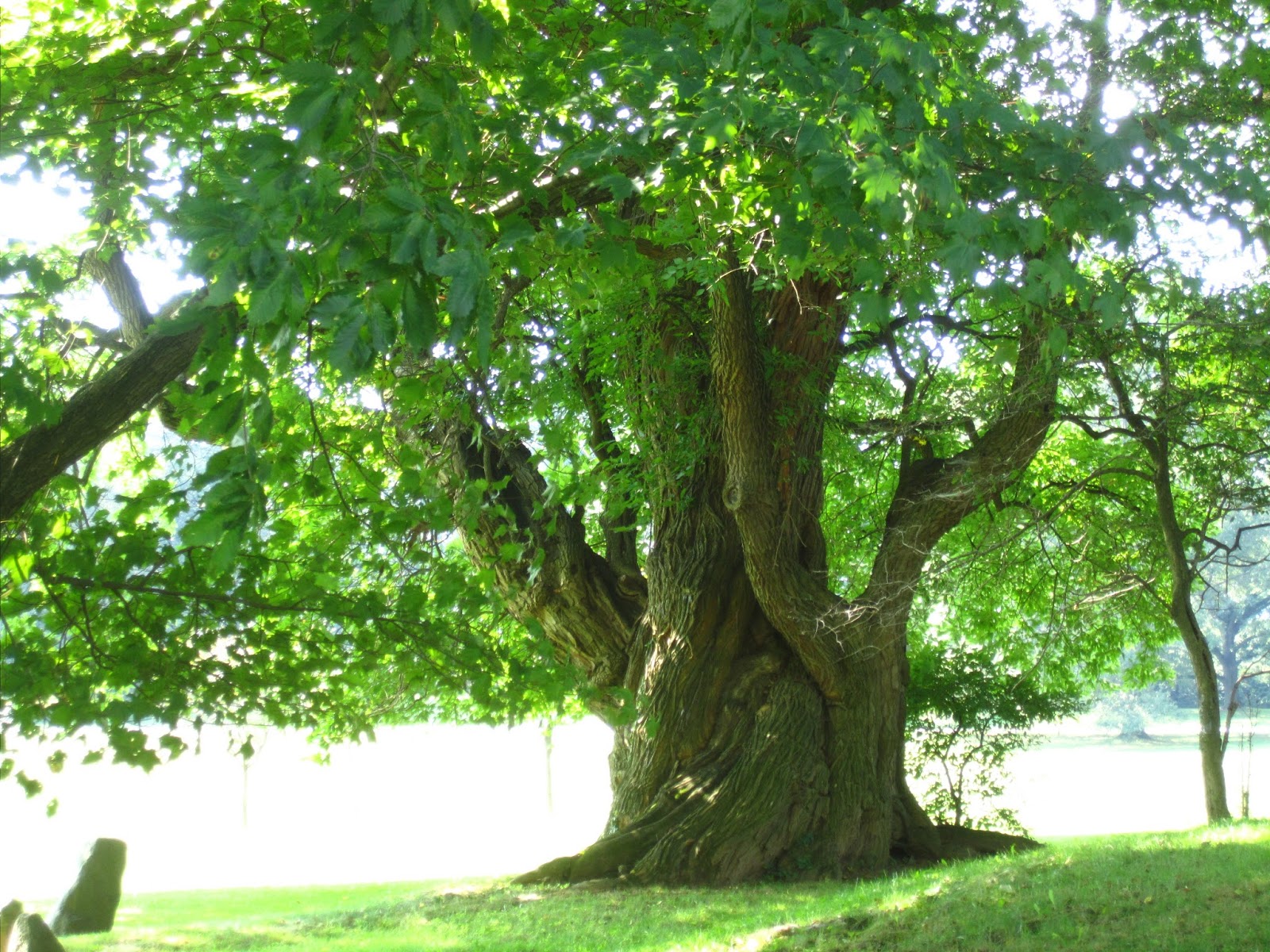
Beautiful Gnarls: 350-year-old Osage Orange Tree near Eleutherian Mills

Interspersed with the backdrop of nature's quiet beauty, a plethora of antique equipment, massive gears, and rusty machinery rumbled melodically or lay quietly embedded in the ground. There is something stunning about industrial mixing with nature, as nature is begins reclaim her domain. The innate aesthetic in the circles, repetition, and symmetry of cogs, rivets, and gears provide a a striking contrast with the wildness and vivid colors of nature.


Saturday, August 17, 2013

Ancient Egypt and the Little Girl

Sitting in the tranquil dimness of my room, listening to the abrupt cicadas and breathing in the soft end-of-summer air, I find myself thinking of my childhood in California. I so often long to return there, but is it a longing for California itself or for the nostalgia of childhood? I think of Monterey Bay’s black lava-like rocks and bobbing otters, the aquarium's colossal, plate-glass room, opening like a giant foyer to the sea’s own mysterious mansion of living rock and giant kelp colonnades; the fog fading into the morning warmth in the old streets and quaint houses at Carmel; Junipero Serra’s sunset-colored missions surrounded by flowering bushes shaking in the breeze; the fantastical double-decker carousel at the Great America amusement park in my hometown, San Jose; the warm, cerulean water at the vibrant beaches where seals bellow to each other and cover the rocks and piers like fat, whiskered sunbathers.


And I think of the Museum.


When I was child, I wanted to be either an archaeologist or a paleontologist. I lost interest in paleontology when I realized that you spend most of your time digging very very slowly, not popping already-assembled Tyrannosaur skeletons from the ground every other day. But my interest in archaeology stayed strong despite my phobic terror of mummies. Mummies be darned, I love Ancient Egypt. I don’t remember when my infatuation started, except that I have a vivid memory of being about seven years old and standing in the Rosicrucian Museum in town and gawking in awe at a section of painted tomb wall from a pyramid’s interior. Sheltered from the fading effects of light for thousands of years, the paints had retained the vivid deep blues in the midnight skies and the rich golds and scarlets on the figures and accents. Looking back, I now realize that they were probably replicas, but the effect on me was the same: I suddenly understood that ancient artists didn’t actually paint in faded colors - their art was as colorful as many of the paintings we create today. How much, I wondered, of ancient life itself was like this - archaic and outdated today, but vibrant and real in its own time? In fact (I thought to myself with a dawning amazement) the people of the ancient world didn’t think of themselves as ancient, but as modern. I wondered what museums they visited when they were alive, and if they were busy swatting flies on hot days just like me.

For a long time after that visit, I dreamed at night of sneaking back there, past the museum’s alarm system and back into that room of sapphires, golds, and burnt umber. Who knew what really happened when everyone turned off the 20th-century light bulbs and left that room alone with just the darkness and cricket songs?

Friday, August 2, 2013

Whispers from Antiquity

The Maryland State Archives recently tweeted the following:

It's quite a unique collection, thanks to the diverse letters, posters, and memorabilia that the Sands family of Annapolis left behind. Here are some of my favorite images, pulled from the Archives' online e-publication: 


Original invitation to Inaugural Ball for President James Buchanan


"N. Hess' Sons Fine Shoes." If they are as cool as the envelope's graphics, then they must be fine indeed.


I love this stationary from an 1892 letter - it reminds me of Hummel figurines.


Maryland State Fireman's Association. The program features an old-fashioned
horse-drawn fire engine.


Program for Company E, 2nd Regiment of the American Guard, 1896


Tolchester Beach Excursions. I'm in!


Poster: "Southern Rights: Let us Alone!" Great graphics. Eternal issue.


Child's drawing on the back of a letter


Leaf rubbings: beautiful.


Without protection and preservation, our collective memory of our 
past slowly disappears. Plus, if a document is one of those rare 
records of the life of someone who was lower class, enslaved, or 
indentured, it can mean losing the last written trace of them.